Single-cell biology of microbiome
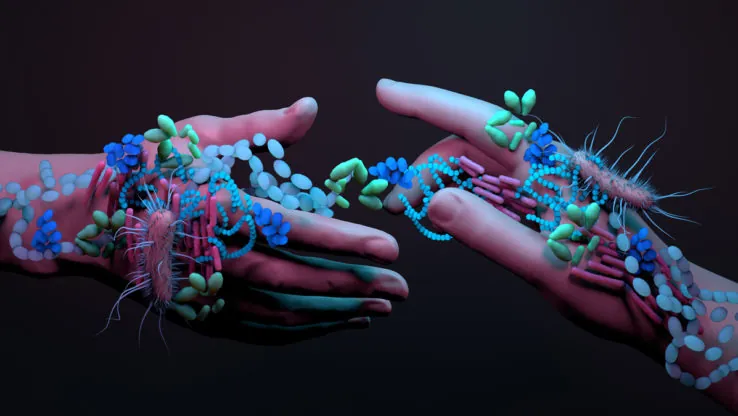
Microbiomes are complex natural communities, comprised of hundreds of interacting species. Individual bacteria within the microbiome encounter a diverse array of environmental niches, as well as secreted signals from, or physical contact with other microbiome members. As a result, a multitude of community-wide behaviors emerge from variable phenotypic states and responses to highly heterogeneous microenvironment. Bulk metatransriptomics is unable to resolve phenotypic heterogeneity of natural bacterial populations.
In this project, we aim to uncover the phenotypic subpopulations arising in key species prevalent in human gut microbiota. We also seek to establish how the heterogeneous sampling of diverse metabolic niches promotes inter-species interactions within a complex community. For this purpose, we are developing a multispecies single-cell RNA sequencing approach optimized for microbiomes. We successfully applied this approach to human fecal microbiota, capturing high-quality single-cell transcriptomes from across >25 abundant bacterial species from each microbiome. Our approach revealed extensive transcriptional heterogeneity, particularly in expression of metabolic pathways, stress-related genes, and core housekeeping genes. Further, we detected multiple viral and plasmid transcripts and assigned these mobile genetic elements to hosts from multiple genera. The results will pave the way toward building systems-level understanding of the phenotypic structure and the emergent properties of natural microbiota.
Led by: Dmitry Sutormin